GuidesList
Top 7 longevity supplements: what each one does, and what the studies found
From sulforaphane to vitamin D3: the dose researchers used for each one, who paid for the trials, and what to check before you buy.
Brands have paid for promotional consideration in these articles.
There are a lot of longevity supplements. These 7 each have a known job in the cell and published research behind them.
What’s on this list
For each one, we say what kind of research is behind it: a trial in people, a long study of a population, or work in cells and animals. We also give the dose the researchers used.
Where a lab has measured competing products, we give the numbers, and we tell you when a company with a product in the test paid for it.
Sulforaphane comes first because it reaches the furthest: one switch turns on roughly 200 genes that protect the cell.
1. Sulforaphane
It switches on your cells’ own defenses
What it does. Sulforaphane is a compound that comes from broccoli. It activates NRF2, a switch inside your cells that turns on roughly 200 protective genes.
That’s why the research reaches so far.
Sulforaphane calms chronic inflammation, the biggest driver of aging. It also activates antioxidant defenses, supports flexible vessels and healthy cholesterol, protects neurons, and steadies blood sugar.
The evidence. More than 3,000 published studies, going back to 1992, when researchers at Johns Hopkins first isolated it from broccoli.
In a study of 40 healthy overweight adults, eating 30 g of broccoli sprouts a day for 10 weeks significantly lowered 2 markers of inflammation, IL-6 and C-reactive protein (Clinical Nutrition, 2019).
In a study of 134,796 adults in Shanghai, the people who ate the most cruciferous vegetables had a 22% lower risk of death from any cause than the people who ate the least (American Journal of Clinical Nutrition, 2011).
The dose studied. The published studies that show significant health benefits of sulforaphane use dosages between 30 mg and 70 mg per day.
What to look for. How much sulforaphane the capsule delivers, as measured by a lab. That isn’t always the number in a product’s name.
In October 2024, IEH Laboratories measured 21 sulforaphane supplements in the finished capsule: 20 products bought at retail, tested alongside BROQ. Of those 20, 11 delivered less than 1 mg per serving.
Products named for 800 mg, 602 mg and 550 mg delivered 0.0 mg, 5.3 mg and 0.5 mg.
The testing was commissioned and paid for by the maker of one of the twenty-one products. The full lab reports are published.
The pick. BROQ, at 25 mg of sulforaphane per serving, the highest of the 21. More than double the sulforaphane of 18 of the 20 other brands tested.
Unlike most sulforaphane brands, BROQ’s capsule opens in your intestines, not your stomach. The directions allow up to 3 servings a day, which covers the range the studies used.
2. Spermidine
Your cells think you’re fasting
What it does. Your body produces spermidine for one reason: to launch autophagy, the process cells use to break down and recycle their own worn-out parts.
Fasting does the same thing, which is why scientists call spermidine a caloric restriction mimetic. The Nobel Prize was awarded for discovering how autophagy works.
The evidence. In a 20-year study comparing 146 compounds, spermidine had the strongest link to a longer life of any nutrient measured. Nearly six additional years.
The study followed 829 people in Bruneck, Italy, and measured the spermidine in their diets (American Journal of Clinical Nutrition, 2018).
In a placebo-controlled trial that ran for 3 months, spermidine pushed significantly more hair follicles back into active growth (Dermatology Practical & Conceptual, 2017).
A 2024 study in Nature Cell Biology found that spermidine rises with fasting in 4 species, humans included.
The dose studied. 20 mg meets or exceeds the dosage in every major study linking spermidine to a longer life. Some protocols call for 40 mg.
What to look for. Most spermidine supplements use wheat germ extract: a big capsule of plant material where only about 1% of the active ingredient is actual spermidine.
Some of those labels give only the weight of the extract, not how much spermidine is in it. So look for the milligrams of spermidine, as measured by a lab.
In September 2026 an independent 3rd-party lab measured 6 spermidine products. They delivered between 0.7 mg and 21.9 mg per serving.
The testing was commissioned and paid for by the maker of one of the six products tested.
The pick. SPMD-99, at 21.9 mg per serving against 20 mg on its label, the highest of the 6. Double the spermidine of 4 out of the 5 top competitors tested.
The fifth, Renue By Science Liposomal Spermidine, measured 19.0 mg. SPMD-99 is pure spermidine, with no wheat germ.
3. NMN
It raises NAD+, which your cells use to make energy and repair DNA
What it does. Your body turns NMN into NAD+, the molecule every cell uses to make energy and repair its DNA.
NAD+ begins to drop around 25. 25% is gone by your mid-30s, and 50% is gone by 50.
The evidence. Taking NMN has been shown to more than double NAD+ levels, restoring NAD+ to the level it was at age 25. (This is true on average but not for everyone.)
In a 2023 trial in GeroScience, paid for by the 2 companies that made the NMN it tested, 80 healthy adults took a placebo or 300, 600 or 900 mg of NMN a day for 60 days.
Blood NAD+ rose in every NMN group, and those groups walked farther in a 6-minute walking test than the placebo group did.
The dose studied. 300 to 900 mg a day in that trial, with the best results from 600 mg up. Doses up to 2,000 mg per day have been studied in controlled trials.
What to look for. The form first: only the beta form of NMN builds NAD+, and a label that just says NMN doesn’t tell you which form is inside.
Then the amount in a serving, as measured by a lab.
In September 2026 an independent 3rd-party lab measured 6 NMN products in their retail packaging. They delivered between 260.7 mg and 1,139.6 mg per serving.
None of them fell short of its own label by more than 10%. The gap comes from how much each brand puts in a serving.
The testing was commissioned and paid for by the maker of one of the six products tested.
The pick. NMN-99, at 1,139.6 mg per serving against 1,000 mg on its label, the highest of the 6. More than double the NMN of 4 out of the 5 top competitors tested.
The fifth, Black Forest NMN 1000 mg, measured 905.0 mg. NMN-99 is made with Uthever NMN, verified at 99+% purity in the beta form.
4. Urolithin A
It clears out worn-out mitochondria
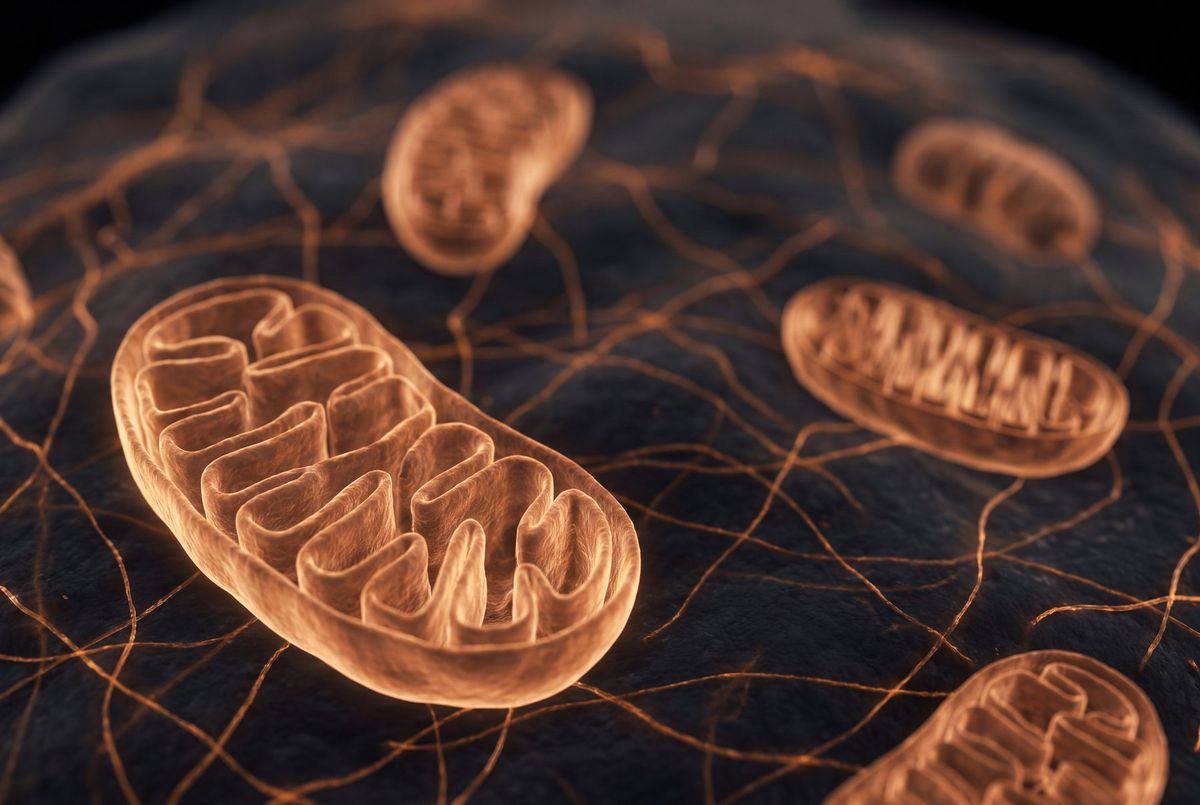
What it does. Mitochondria are the parts of a cell that make its energy, and they wear out. Urolithin A triggers mitophagy, the process a cell uses to clear out its worn-out mitochondria.
The evidence. 3 trials in people, each paid for by Amazentis, the company that makes the urolithin A they tested.
In 88 untrained adults aged 40 to 64, hamstring strength rose by about 10% to 12% after 4 months of urolithin A (Cell Reports Medicine, 2022). Peak power, the trial’s main measure, didn’t improve significantly.
In 66 adults aged 65 to 90, 1,000 mg a day improved muscle endurance at 2 months (JAMA Network Open, 2022). Walking distance, one of that trial’s two main measures, wasn’t significantly different from placebo.
A 2025 trial in Nature Aging gave 50 healthy middle-aged adults 1,000 mg a day for 4 weeks and looked at their immune cells. The urolithin A group ended with a slightly larger share of fresh, less exhausted T cells.
The dose studied. 500 mg or 1,000 mg a day, for up to 4 months.
What to look for. Urolithin A itself, with the milligrams stated.
Your gut bacteria can make it from compounds in pomegranates, but not everyone’s do. In a study of 100 healthy adults, about 40% of those given pomegranate juice turned it into a meaningful amount of urolithin A (European Journal of Clinical Nutrition, 2022).
The pick. Mitopure, sold under the Timeline brand. It’s the urolithin A used in all three trials above, and a serving is 500 mg, the lower of the two doses tested.
The product linked here is a gummy. 2 a day make one serving.
5. Omega-3
It slowed 3 measures of biological age in a 3-year trial
What it does. EPA and DHA are the two omega-3 fats in fish oil and algae oil. Your body builds them into the membranes of your cells, where they help regulate inflammation.
The evidence. DO-HEALTH, a 3-year trial of 2,157 adults aged 70 and older in 5 European countries.
A 2025 analysis in Nature Aging looked at 777 of them, the Swiss participants who gave DNA samples at the start and the end. It measured their biological age with 4 DNA methylation clocks, tests that read aging from chemical marks on DNA.
The people taking 1 g of omega-3 a day aged more slowly on 3 of the 4 clocks. The difference was 2.9 to 3.8 months over the 3 years, which the authors call a small effect.
Earlier papers from the same trial reported 10% fewer falls with omega-3 (American Journal of Clinical Nutrition, 2022). They also reported 39% lower odds of becoming pre-frail, an early stage of frailty, when omega-3, vitamin D and a home exercise program were combined (Journal of Frailty & Aging, 2023).
On the trial’s 6 main measures, which included blood pressure, cognitive function and fractures, none of the 3 treatments made a significant difference (JAMA, 2020).
The dose studied. 1 g a day: 330 mg of EPA and 660 mg of DHA, from algae.
What to look for. The EPA and DHA per serving on the back of the label, not the fish oil total on the front. And a purity test on each batch by an outside certifier.
The pick. Momentous Omega-3. A serving has 1,600 mg of EPA and DHA in a 1:1 ratio, more than the trial used. It’s NSF Certified for Sport, which means every batch is tested by an outside body.
It’s fish oil, from anchovies, sardines and mackerel. The trial used algae oil.
6. Fisetin
A candidate for clearing out worn-out cells
What it does. Some cells stop dividing as they age but don’t die. They’re called senescent cells, and they release signals that inflame the tissue around them.
A senolytic is a compound that clears those cells out. Fisetin, a plant compound found in strawberries and other fruits, is one of the candidates.
The evidence. So far, mostly from cells and mice.
In a 2018 study in EBioMedicine, researchers tested 10 flavonoids and found fisetin the most potent senolytic of them. Old mice given fisetin had fewer senescent cells and lived longer.
Fisetin also reduced senescent cells in samples of human fat tissue treated in the lab. Trials in people are under way, including one at the Mayo Clinic in older adults.
The dose studied. In mice, about 60 mg per kg of body weight a day in food. The Mayo Clinic trial gives 20 mg per kg a day for 2 days in a row.
For a 70 kg (154 lb) adult that’s 1,400 mg a day, taken for 2 days.
What to look for. The milligrams of fisetin per capsule. Until the human trials report, there’s no daily dose to match a label against.
The pick. Renue By Science Fisetin. Each capsule has 150 mg of fisetin as its only active ingredient, in a liposomal form, a coating meant to help absorption.
At one capsule a day, that’s well below the amount the Mayo Clinic trial uses.
7. Vitamin D3 + K2
It slowed the shortening of telomeres over 4 years in a large trial
What it does. Vitamin D helps your body absorb calcium, and your immune system uses it too.
Vitamin K2 switches on the proteins that hold calcium in bone and keep it out of artery walls, which is why the two are sold together.
The evidence. VITAL, a trial of 25,871 US adults who took 2,000 IU of vitamin D3, 1 g of omega-3, both, or a placebo for 5 years.
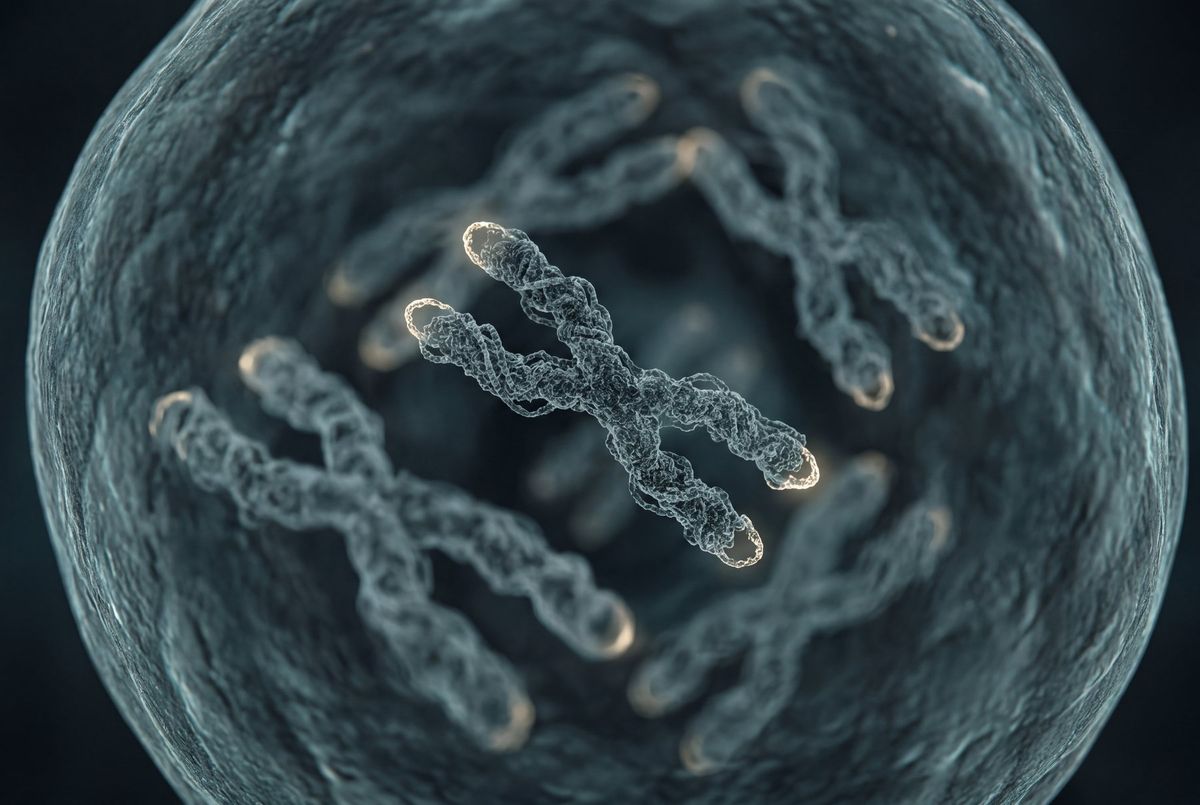
A 2025 analysis in the American Journal of Clinical Nutrition followed the telomeres of 1,054 of them. Telomeres are the caps on the ends of chromosomes, and they shorten as cells divide.
Over 4 years, the people taking vitamin D3 lost about 140 fewer base pairs of telomere length than the people on placebo. In announcing the result, the researchers put that at the equivalent of nearly 3 years of aging.
Omega-3 made no significant difference to telomeres in the same trial.
VITAL tested D3 without K2. For K2, a 3-year trial in 244 healthy postmenopausal women found that 180 mcg a day of the MK-7 form improved arterial stiffness (Thrombosis and Haemostasis, 2015).
The dose studied. 2,000 IU of D3 a day in VITAL. 180 mcg of K2, as MK-7, in the arterial trial.
What to look for. The IU of D3 per serving, and which form of K2 is in it. A blood test for vitamin D tells you where you’re starting from.
The pick. Thorne D/K2, a liquid. 2 drops give 1,000 IU of D3 and 200 mcg of K2, so 4 drops match the D3 dose in VITAL, and the drops make it easy to adjust.
Its K2 is the MK-4 form, not the MK-7 used in the arterial trial.
The 7 at a glance
| # and Supplement | What it does | Main evidence | Dose studied | Pick |
|---|---|---|---|---|
1Sulforaphane | Switches on roughly 200 protective genes | 3,000+ published studies, and a 10-week study in 40 adults | 30 to 70 mg a day | BROQ |
2Spermidine | Launches autophagy | 20-year study of 829 people | 20 mg a day | SPMD-99 |
3NMN | Raises NAD+ for energy and DNA repair | 60-day trial in 80 people | 300 to 900 mg a day, up to 2,000 mg | NMN-99 |
4Urolithin A | Clears out worn-out mitochondria | 3 trials in people, paid for by its maker | 500 or 1,000 mg a day | Mitopure |
5Omega-3 (EPA and DHA) | Built into cell membranes, helps regulate inflammation | 3-year trial, 777 people in the aging analysis | 1 g a day | Momentous Omega-3 |
6Fisetin | Candidate for clearing senescent cells | Cells and mice, human trials under way | 20 mg per kg for 2 days | Renue By Science Fisetin |
7Vitamin D3 + K2 | D3 slowed telomere shortening, K2 directs calcium | 5-year trial, 1,054 people followed for telomeres over 4 years | 2,000 IU of D3 a day | Thorne D/K2 |
How to use this list
These 7 work on different things, so one doesn’t stand in for another.
You don’t need all of them on day one. Pick the one whose job matters most to you, and check its dose against the studies above.
Then give it time. The trials on this list ran from 4 weeks to 5 years.
Some links in this article are Amazon affiliate links, so Longevity News earns from qualifying purchases.
Sources
- Zhang Y, Talalay P, and colleagues, Proceedings of the National Academy of Sciences, 1992. The isolation of sulforaphane from broccoli at Johns Hopkins.
- López-Chillón MT, and colleagues, Clinical Nutrition, 2019. 40 healthy, overweight adults, 30 grams of broccoli sprouts a day, 10 weeks.
- Zhang X, Shu XO, Xiang YB, and colleagues, American Journal of Clinical Nutrition, 2011. 134,796 adults in Shanghai, cruciferous vegetables and risk of death.
- Kiechl S, Pechlaner R, Willeit P, and colleagues, American Journal of Clinical Nutrition, 2018. 829 people in Bruneck, Italy, followed for 20 years.
- Rinaldi F, and colleagues, Dermatology Practical & Conceptual, 2017. Spermidine or a placebo, 3 months, hair follicles.
- Hofer SJ, and colleagues, Nature Cell Biology, 2024. Spermidine and fasting in 4 species, humans included.
- Yi L, Maier AB, Tao R, and colleagues, GeroScience, 2023. 80 healthy adults, a placebo or 300, 600 or 900 mg of NMN a day, 60 days.
- Singh A, D’Amico D, Andreux PA, and colleagues, Cell Reports Medicine, 2022. 88 untrained adults aged 40 to 64, urolithin A or a placebo, 4 months.
- Liu S, D’Amico D, Shankland E, and colleagues, JAMA Network Open, 2022. 66 adults aged 65 to 90, 1,000 mg of urolithin A a day or a placebo.
- Denk D, Singh A, Kasler HG, and colleagues, Nature Aging, 2025. 50 healthy middle-aged adults, 1,000 mg of urolithin A a day or a placebo, 4 weeks.
- Singh A, D’Amico D, Andreux PA, and colleagues, European Journal of Clinical Nutrition, 2022. 100 healthy adults, pomegranate juice or urolithin A.
- Bischoff-Ferrari HA, Gängler S, Wieczorek M, and colleagues, Nature Aging, 2025. The DO-HEALTH trial: 777 adults aged 70 and older, 4 DNA methylation clocks, 3 years.
- Bischoff-Ferrari HA, Freystätter G, Vellas B, and colleagues, American Journal of Clinical Nutrition, 2022. The DO-HEALTH trial: falls.
- Gagesch M, Wieczorek M, Vellas B, and colleagues, Journal of Frailty & Aging, 2023. The DO-HEALTH trial: pre-frailty.
- Bischoff-Ferrari HA, Vellas B, Rizzoli R, and colleagues, JAMA, 2020. The DO-HEALTH trial: 2,157 adults aged 70 and older, the trial’s 6 main measures, 3 years.
- Yousefzadeh MJ, Zhu Y, McGowan SJ, and colleagues, EBioMedicine, 2018. Fisetin in cells, in old mice, and in human fat tissue treated in the lab.
- Mayo Clinic, ClinicalTrials.gov, NCT03675724. A trial of fisetin in older adults, 20 mg per kg a day for 2 days in a row.
- Zhu H, Manson JE, Cook NR, and colleagues, American Journal of Clinical Nutrition, 2025. The VITAL trial: telomere length in 1,054 adults over 4 years.
- Mass General Brigham, announcement of the VITAL telomere result, May 21, 2025.
- Knapen MH, Braam LA, Drummen NE, and colleagues, Thrombosis and Haemostasis, 2015. 244 healthy postmenopausal women, 180 mcg of vitamin K2 as MK-7 a day or a placebo, 3 years.
- IEH Laboratories, lab reports on 21 sulforaphane supplements, October 2024. The testing was commissioned and paid for by the maker of one of the twenty-one products.
- An independent 3rd-party lab, reports on 6 NMN products and 6 spermidine products, dated September 17, 2026. The testing was commissioned and paid for by the maker of one of the six products tested in each group.
Brands have paid for promotional consideration in these articles.