GuidesExplainer
The 3 supplements longevity scientists recommend more than any others
Sulforaphane, NMN and spermidine are the 3 that longevity scientists name most. See what the research found, and what lab tests of 33 products show about which capsules deliver.
Brands have paid for promotional consideration in these articles.
A lot of compounds get sold as longevity supplements. The people who study aging keep coming back to 3.
Leading longevity scientists recommend sulforaphane, NMN and spermidine more than any other supplements.
The three aren’t related. One comes from broccoli, and the other two are molecules your own body makes.
The research on all three is strong. The hard part is buying them, because when labs measured what’s inside the capsules, products with the same word on the label delivered very different amounts.
Those lab tests were commissioned and paid for by the maker of one product in each test.
Why these three
Other supplements have real research behind them too. Omega-3, vitamin D and urolithin A all do, and we cover them in our list of the top 7 longevity supplements.
These three are the ones the people who study aging name most often. And for all three, there are now lab results showing how much the leading products deliver.
Sulforaphane
Sulforaphane is a compound that comes from broccoli. It was first isolated at Johns Hopkins in 1992.
It now has more than 3,000 published studies behind it, which makes it the single most studied molecule in longevity.
It works by activating NRF2, which switches on roughly 200 genes your cells use to protect and detoxify themselves.
The research covers 6 areas:
- Longevity. It calms chronic inflammation, the biggest driver of aging.
- Immunity. It activates antioxidant defenses and natural killer cell activity.
- Heart. It supports flexible vessels and healthy cholesterol.
- Brain. It protects neurons for clarity, memory and focus.
- Energy. It supports mitochondria for clean, stimulant-free energy.
- Metabolism. It steadies blood sugar and supports insulin sensitivity.
What a lab found in 21 sulforaphane products
Judging by the lab results, sulforaphane is the hardest of the three to buy well.
It forms only when a compound in broccoli, glucoraphanin, meets an enzyme called myrosinase. A capsule has to get both to your intestines in working order.
In October 2024, IEH Laboratories measured how much sulforaphane 21 supplements deliver per serving, in the finished capsule. The 20 competing products were bought at retail and tested alongside BROQ.
The testing was commissioned and paid for by the maker of one of the twenty-one products.
Of the 20 competing products, 11 delivered less than 1 mg per serving. Of those 11, 7 came in below the lab’s reporting limit.
For scale, the published studies that show significant health benefits of sulforaphane use between 30 mg and 70 mg per day.
BROQ came first, at 25 mg per serving. More than double the sulforaphane of 18 of the 20 other brands tested.
The two that came closest were SM Nutrition 50mg Sulforaphane, at 16.0 mg, and Pure TheraPro Rx OncoProtect ES, at 14.0 mg. All three of the top products use delayed-release capsules, which open in your intestines instead of your stomach.
The full lab reports are published.
See the lab results for sulforaphane, NMN and spermidine
BROQ’s most recent batch measured 34.1 mg per serving, against a minimum of 25 mg on its pouch. That figure is from a report by an independent 3rd-party lab, dated September 17, 2026 and published by BROQ’s maker.
One serving has as much sulforaphane as 3.5 pounds of raw broccoli, and the directions allow up to 3 servings a day.
- What to look for
- A delayed-release capsule, and a published lab test of the finished capsule
- Dose in the studies
- 30 mg to 70 mg per day
- Best for
- Almost anyone, because chronic inflammation is the biggest driver of aging
NMN
Your body uses NMN to make NAD+, the molecule every cell needs to make energy and repair its DNA.
NAD+ falls as you get older, and it starts early.
It begins to drop around 25. 25% is gone by your mid-30s, and 50% is gone by 50.
Your cells need it the whole time. NAD+ powers the enzymes that fix tens of thousands of daily DNA breaks.
It also fuels sirtuins, the enzymes science links to longer life. When NAD+ drops, sirtuins shut down.
Taking NMN has been shown to more than double NAD+ levels, restoring NAD+ to the level it was at age 25 (Igarashi 2022, Yi 2023). This is true on average but not for everyone.
What a lab found in 6 NMN products
2 things on an NMN label matter most: the dose and the form.
More than half of the NMN supplements sold today deliver 500 mg or less, and doses up to 2,000 mg per day have been studied in controlled trials.
Only the beta form of NMN builds NAD+, and a label that just says NMN doesn’t tell you which form is inside.
Then there’s the question of whether the NMN is in the capsule at all. A 2021 analysis from Niagen Bioscience found that 14 out of 22 NMN supplements tested contained less than 1% of the NMN on the label.
A newer test had better news. An independent 3rd-party lab measured 6 NMN products, in retail packages it received unopened, and reported the results on September 17, 2026.
The testing was commissioned and paid for by the maker of one of the six products tested.
All 5 competing brands delivered between 90% and 104% of what their own labels promise. Where they differ is in how much NMN each one sets out to deliver.
| Product | Label says | Lab measured, per serving |
|---|---|---|
| NMN-99 | 1,000 mg | 1,139.6 mg |
| Black Forest NMN 1000 mg | 1,000 mg | 905.0 mg |
| Renue By Science Liposomal NMN | 500 mg | 481.0 mg |
| partiQlar Pure NMN 500 mg | 500 mg | 466.8 mg |
| Nutricost NMN 500 mg | 500 mg | 455.1 mg |
| Genex Formulas NMN 250 mg | 250 mg | 260.7 mg |
A serving here is whatever each brand’s own label says it is.
NMN-99 delivered more NMN than any of the other 5 brands tested, and more than its own label promises. More than double the NMN of 4 out of the 5 top competitors tested.
Black Forest NMN 1000 mg came closest, at 905.0 mg. Genex Formulas NMN 250 mg delivered a little more than its label says.
NMN-99 is made from Uthever, the world’s first patented NMN backed by its own randomized, double-blind, placebo-controlled human trial. It’s verified at 99+% purity in the beta form.
It’s also a full clinical-range dose: 1,000 mg per serving. In a controlled trial, NMN at this level raised blood NAD+ 3.7 times above placebo (Bhasin et al., 2023).
A separate trial found higher doses produced the greatest gains in aerobic capacity (Liao et al., 2021).
- What to look for
- The beta form, named on the label, and a published lab test
- Dose in the studies
- Up to 2,000 mg per day in controlled trials
- Best for
- Anyone from their mid-20s on, which is when NAD+ begins to drop
Spermidine
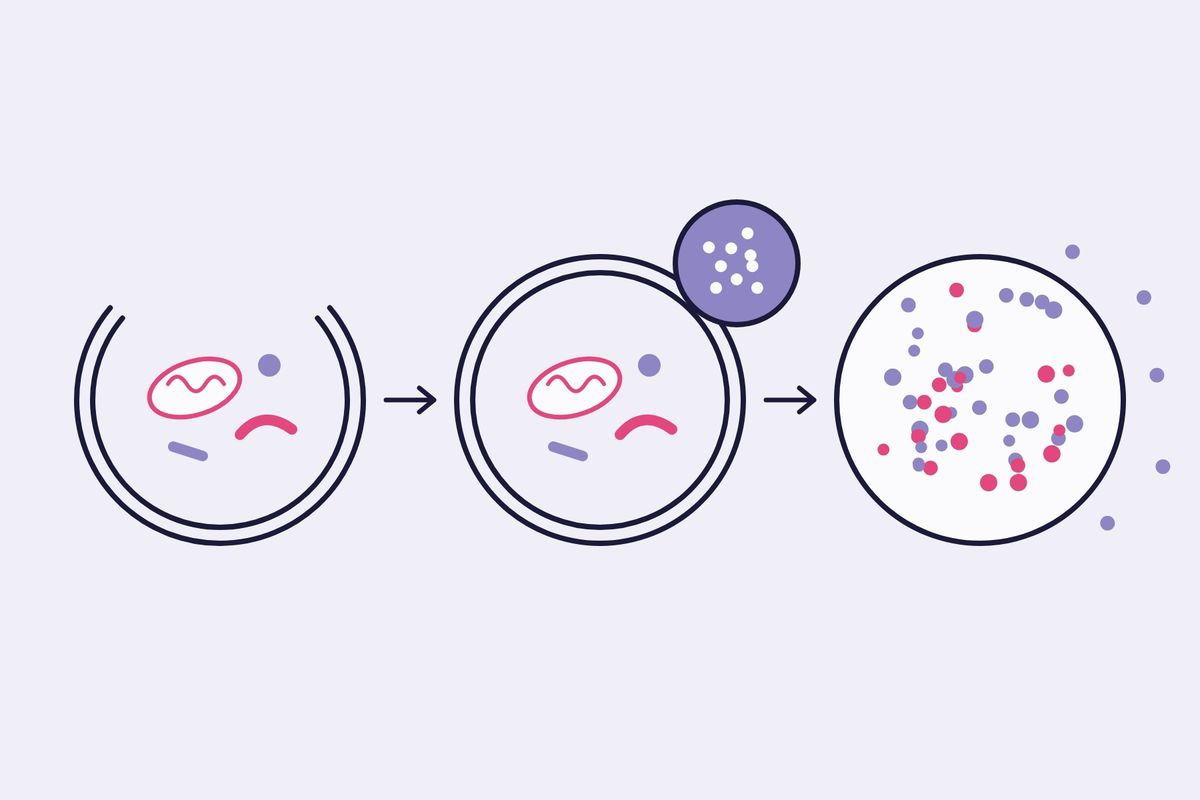
Your body produces spermidine for one reason: to launch autophagy.
Autophagy is how every cell takes out its own trash. It clears worn-out proteins and broken machinery so the cell can rebuild.
The 2016 Nobel Prize in Physiology or Medicine was awarded for discovering how it works.
Fasting is the best-known way to switch autophagy on. Scientists call spermidine a caloric restriction mimetic, which means your cells think you’re fasting.
You get the benefits of fasting, without the fasting.
In a 20-year study comparing 146 compounds, spermidine had the strongest link to a longer life of any nutrient measured. Nearly six additional years.
The study followed 829 people for 20 years (Kiechl et al., American Journal of Clinical Nutrition, 2018).
Studies also tie spermidine to cellular renewal, hair, the heart, skin, the brain and immunity. In a placebo-controlled study, it pushed significantly more hair follicles back into active growth.
What a lab found in 6 spermidine products
Most spermidine supplements use wheat germ extract: a big capsule of plant material where only about 1% is actual spermidine. Some of those labels don’t say how much spermidine is inside.
The lab that measured the NMN products measured 6 spermidine products at the same time, again in retail packages it received unopened.
This testing was also commissioned and paid for by the maker of one of the six products tested.
One serving held anywhere from 0.7 mg of spermidine to 21.9 mg. All 6 results are in our guide to spermidine supplements.
SPMD-99 delivered the most, at 21.9 mg, and more than its own label promises. Double the spermidine of 4 out of the 5 top competitors tested.
Renue By Science Liposomal Spermidine came close, at 19.0 mg, against 8 mg on its label. Double Wood Spermidine 10 mg delivered what its label says.
SPMD-99 is pure spermidine at 99+% purity, with no wheat germ and no gluten. Every serving delivers a full 20 mg, which meets or exceeds the dosage in every major study linking spermidine to a longer life.
Some protocols call for 40 mg, so it’s built to be taken once or twice a day.
- What to look for
- Pure spermidine instead of wheat germ extract, with the amount stated on the label
- Dose in the studies
- 20 mg meets or exceeds the dosage in every major study linking spermidine to a longer life
- Best for
- Anyone who wants the nutrient with the strongest link to a longer life, and anyone who likes the idea of fasting more than the practice
Taking all three
Each one works on its own, and they can be taken together, because they work on different things.
Take sulforaphane and NMN in the morning, and spermidine with your last meal.
That said, any time of day works. Consistency matters most.
See BROQ, NMN-99 and SPMD-99 together
Sources
- Igarashi 2022, Yi 2023
- Bhasin et al., 2023
- Liao et al., 2021
- Kiechl et al., American Journal of Clinical Nutrition, 2018
- See the lab results for sulforaphane, NMN and spermidine
Brands have paid for promotional consideration in these articles.