SpermidineExplainer
The benefits of fasting, without skipping a meal
Fasting works by triggering autophagy, the deep cleanup inside your cells. Researchers have found the molecule that carries that signal, and it works while you’re eating normally.
Brands have paid for promotional consideration in these articles.

When you fast, your body makes more of a molecule called spermidine.
That matters a lot. In 2024, researchers showed that without spermidine, fasting doesn’t switch on the cellular cleanup it’s famous for.
So if the molecule is doing the work, do you need the hunger?
Why fasting works
Your cells have a way of clearing out their own junk: worn-out proteins, broken machinery, cellular debris.
It’s called autophagy, from the Greek auto, self, and phagy, to eat. Your cells eat themselves, devouring their own worn-out parts and rebuilding fresh from the material.
The 2016 Nobel Prize in Physiology or Medicine was awarded for discovering how autophagy works.
Autophagy runs harder when food is scarce. If nothing is coming in, the cell recycles what’s already there.
Go long enough without eating, and cellular cleanup goes up. That’s what a fast is doing for you.
Why it’s hard to keep up
The catch is that you only get the cleanup when you go hungry.

That’s fine for a while. It’s much harder to keep up year after year.
It gets in the way of a lot of ordinary life, and it isn’t right for everyone.
What carries the signal
The 2024 study is Hofer et al., in Nature Cell Biology.
The researchers measured spermidine during fasting or calorie restriction in 4 species, humans included. It rose in all 4.
Then they blocked it. Without spermidine, fasting no longer triggered autophagy.
So spermidine is part of how fasting works. And it’s a molecule you can take.
The same signal, with dinner on the table
Your body produces spermidine for one reason: to launch autophagy. The deep cellular cleanup that hunts down every piece of debris piling up inside your cells, and destroys it.
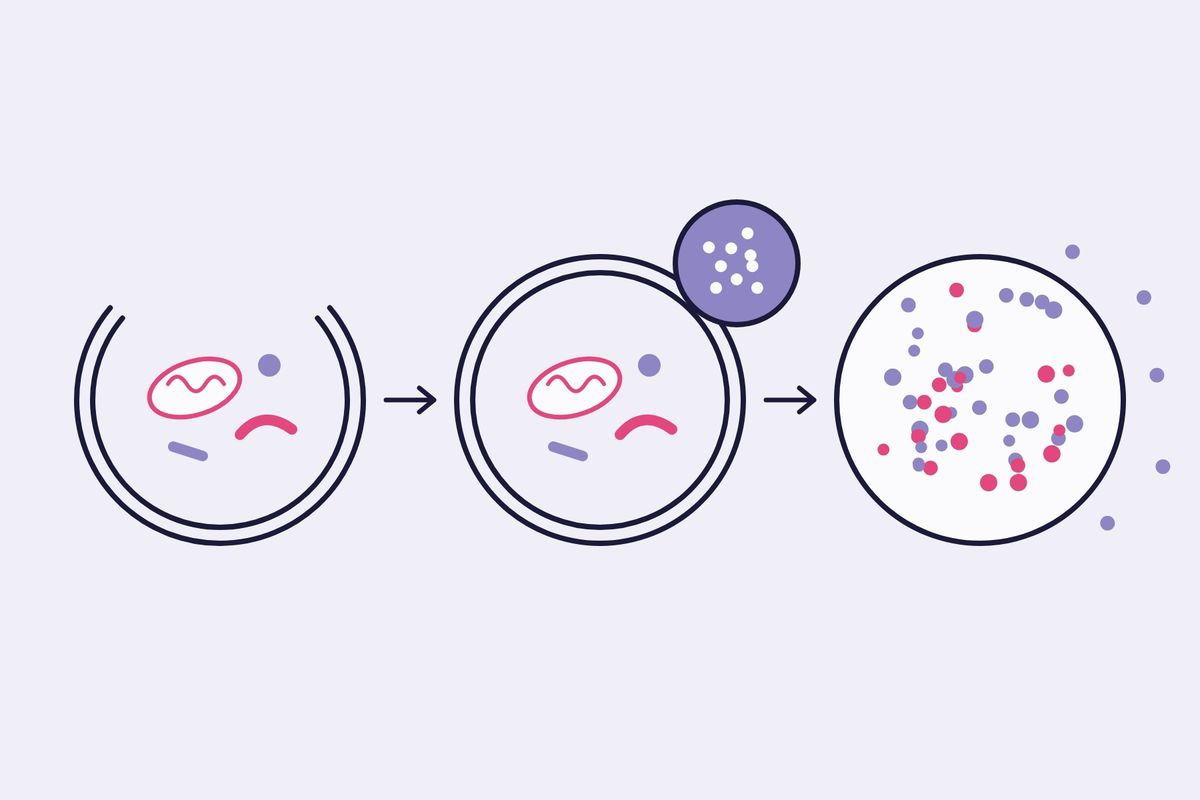
Scientists call it a caloric restriction mimetic. In plain terms, your cells think you’re fasting.
It activates the exact same renewal pathways as a prolonged fast. Every cell gets the signal to strip out the old, the broken and the spent, and rebuild from scratch.
No hunger. No deprivation. The full power of fasting, from a molecule your body already knows.
Have your cake and eat it too. Get the benefits of fasting. Without the fasting.
What 20 years of data show
Spermidine has long-term numbers behind it, too.
Researchers in Italy followed 829 adults for 20 years and compared 146 compounds in their diets (Kiechl et al., American Journal of Clinical Nutrition, 2018).
Spermidine had the strongest link to a longer life of any nutrient measured. The gap between the highest intake and the lowest was equivalent to nearly six additional years of life.
Where better cleanup shows up
You can’t feel autophagy. Researchers have seen what it does in 5 places.
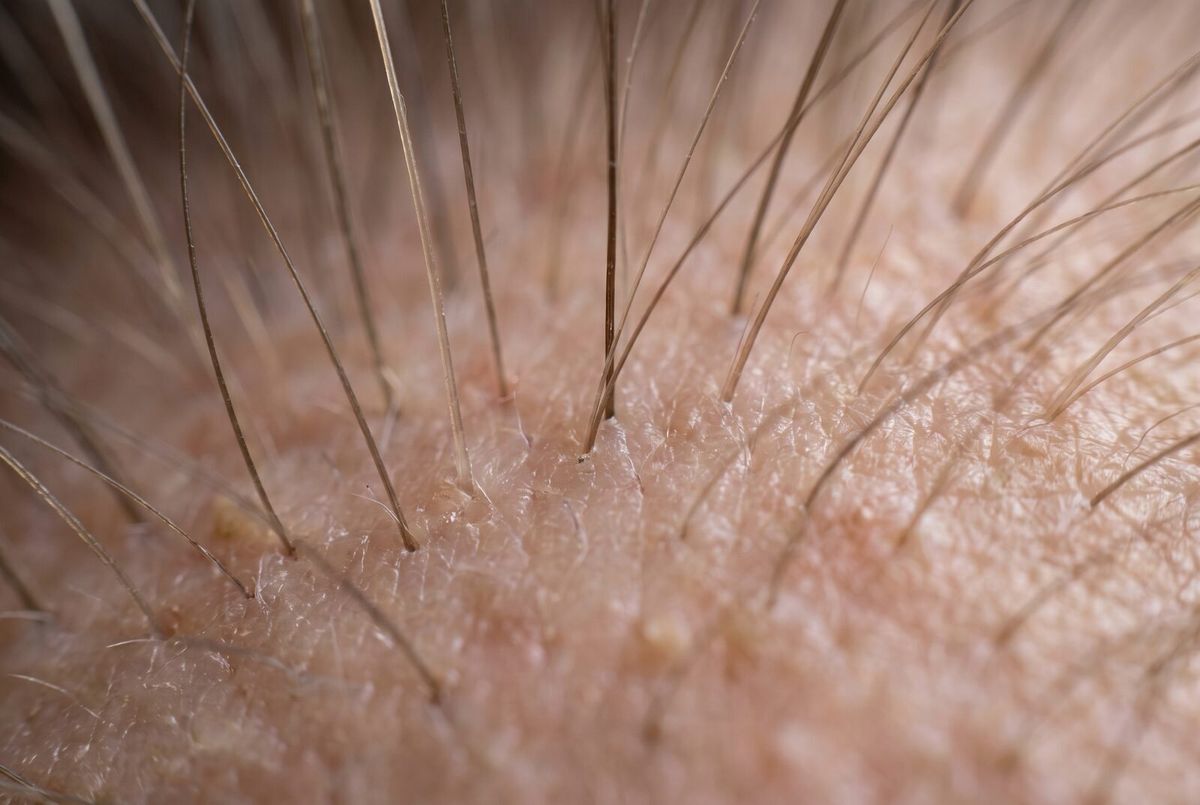
Hair. Your follicles have two modes, growing and resting, and more of them rest as you age.
Spermidine drives autophagy directly in the scalp, clearing the oxidative damage that shuts follicles down. In a placebo-controlled 90-day study, it pushed significantly more follicles back into active growth (Rinaldi et al., Dermatology Practical & Conceptual, 2017).
Heart. It helps keep your hardest-working muscle running strong. Higher intake tracks with healthier hearts in population studies (Eisenberg et al., Nature Medicine, 2016; Han et al., Nutrients, 2024).
Skin. It drives collagen production and strengthens the moisture barrier that keeps skin firm and elastic (Kim et al., Communications Biology, 2021).
Brain. It crosses the blood-brain barrier and clears the toxic protein buildup that clouds thinking and memory (Wirth et al., Cortex, 2018; Schroeder et al., Cell Reports, 2021).
Immunity. Spermidine reversed declining immune function and reduced chronic inflammation in a recent clinical study (Alsaleh et al., Aging Cell, 2026).
If you already fast
Keep going. Nothing here is a reason to stop.
Spermidine works on the same renewal pathways a fast triggers. And it’s there on the days you eat, which for most people is most days.
What to look for in a supplement
One thing matters more than the rest: how much spermidine is actually in the capsule.
Most spermidine supplements use wheat germ extract: a big capsule of plant material where only about 1% of the active ingredient is actual spermidine.
In September 2026, an independent 3rd-party lab measured the spermidine in SPMD-99 and 5 top competitors. The results ran from 0.7 mg per serving to 21.9 mg.
The testing was commissioned and paid for by the maker of one of the six products tested.
Read the lab reports for all 6 products
The highest was SPMD-99, which is pure spermidine with no wheat germ. Double the spermidine of 4 out of the 5 top competitors tested.
The one exception was Renue By Science Liposomal Spermidine, which measured 19.0 mg.
SPMD-99 is labeled at 20 mg per serving. That meets or exceeds the dosage in every major study linking spermidine to a longer life.
To see all 6 products side by side, read our guide to the spermidine supplements the lab measured.
Sources
- Hofer et al., Nature Cell Biology, 2024
- Kiechl et al., American Journal of Clinical Nutrition, 2018
- Rinaldi et al., Dermatology Practical & Conceptual, 2017
- Eisenberg et al., Nature Medicine, 2016
- Han et al., Nutrients, 2024
- Kim et al., Communications Biology, 2021
- Wirth et al., Cortex, 2018
- Schroeder et al., Cell Reports, 2021
- Alsaleh et al., Aging Cell, 2026
- Read the lab reports for all 6 products
Brands have paid for promotional consideration in these articles.