SpermidineReport
A 20-year study compared 146 compounds. One had the strongest link to a longer life.
It’s called spermidine. Researchers followed 829 people for 20 years, and the more of it they got from their food, the lower their risk of dying.
Brands have paid for promotional consideration in these articles.
Most nutrition research looks at one thing at a time. Vitamin D. Omega-3. Fiber.
That’s useful, but it never answers the question most of us actually have: of everything I could be getting from my food, what matters most?
In 2018, a team of researchers published a study that asked exactly that.
They followed 829 people for 20 years, worked out how much of 146 different compounds each person was getting from their diet, and kept track of who was still alive.
Spermidine had the strongest link to a longer life of any nutrient measured. Nearly six additional years.
What the researchers did
The paper is “Higher spermidine intake is linked to lower mortality: a prospective population-based study” (Kiechl et al., American Journal of Clinical Nutrition, 2018).
It’s built on the Bruneck Study in Italy, and it covers 829 people aged 45 to 84.
Several times over those 20 years, each of them filled in a detailed questionnaire about what they ate. From those answers, the researchers calculated how much of each of the 146 compounds was in each person’s diet.
By the end, 341 of the 829 had died.
The researchers then split everyone into thirds, from the lowest spermidine intake to the highest, and compared how often people died in each group.
| Spermidine intake | Deaths per 1,000 people, per year |
|---|---|
| Lowest third | 40.5 |
| Middle third | 23.7 |
| Highest third | 15.1 |
The more spermidine in the diet, the fewer deaths, at every step.
The headline number comes from comparing the top third with the bottom third. The difference in their risk of dying was equal to being 5.7 years younger.
That’s where “nearly six years” comes from.
They then checked the finding in a second group of people, the SAPHIR cohort, and it held.
The more spermidine in the diet, the fewer deaths, at every step.
Where spermidine comes from
Your body makes spermidine, and your food adds to it.
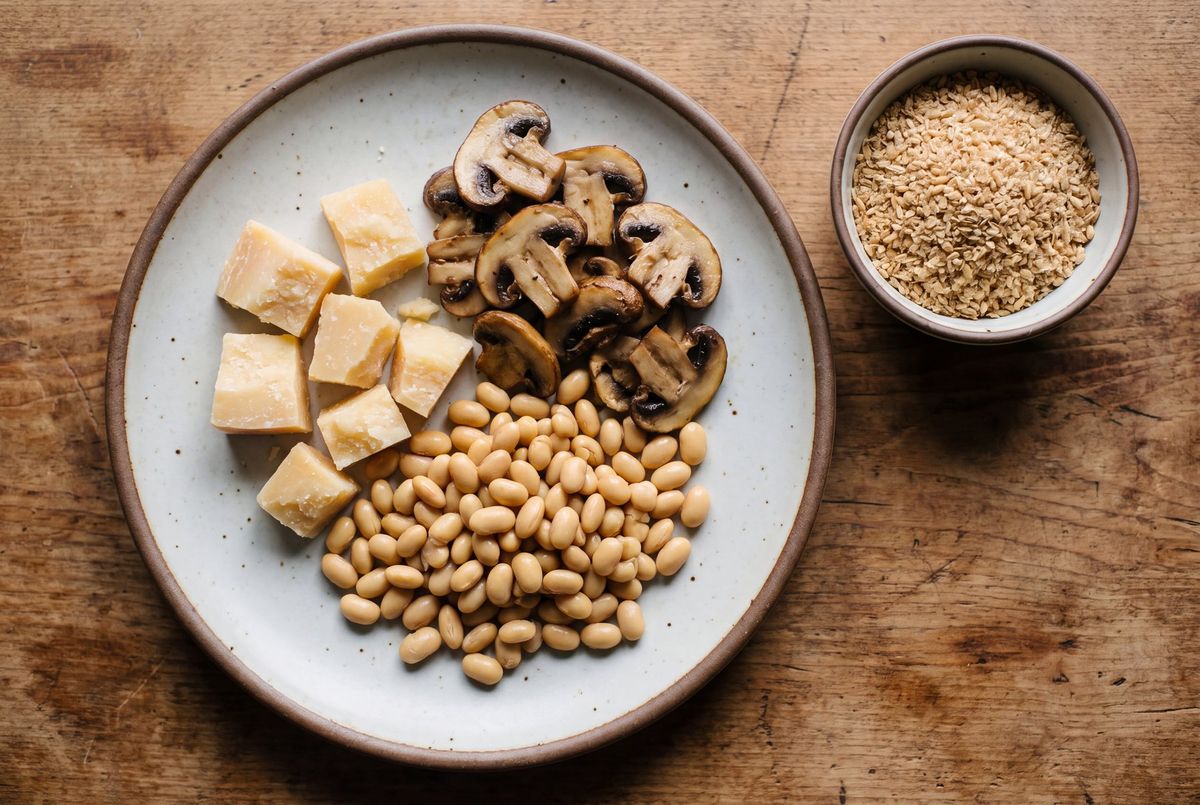
In the Bruneck group, the biggest sources were whole grains, apples and pears, salad, sprouts and potatoes.
Wheat germ, aged cheese, mushrooms and soybeans are known for it too.
The people in the top third weren’t aiming at a number. Their diets were simply rich in spermidine, year after year.
Why one nutrient would matter this much
The answer has to do with how your cells keep themselves clean.
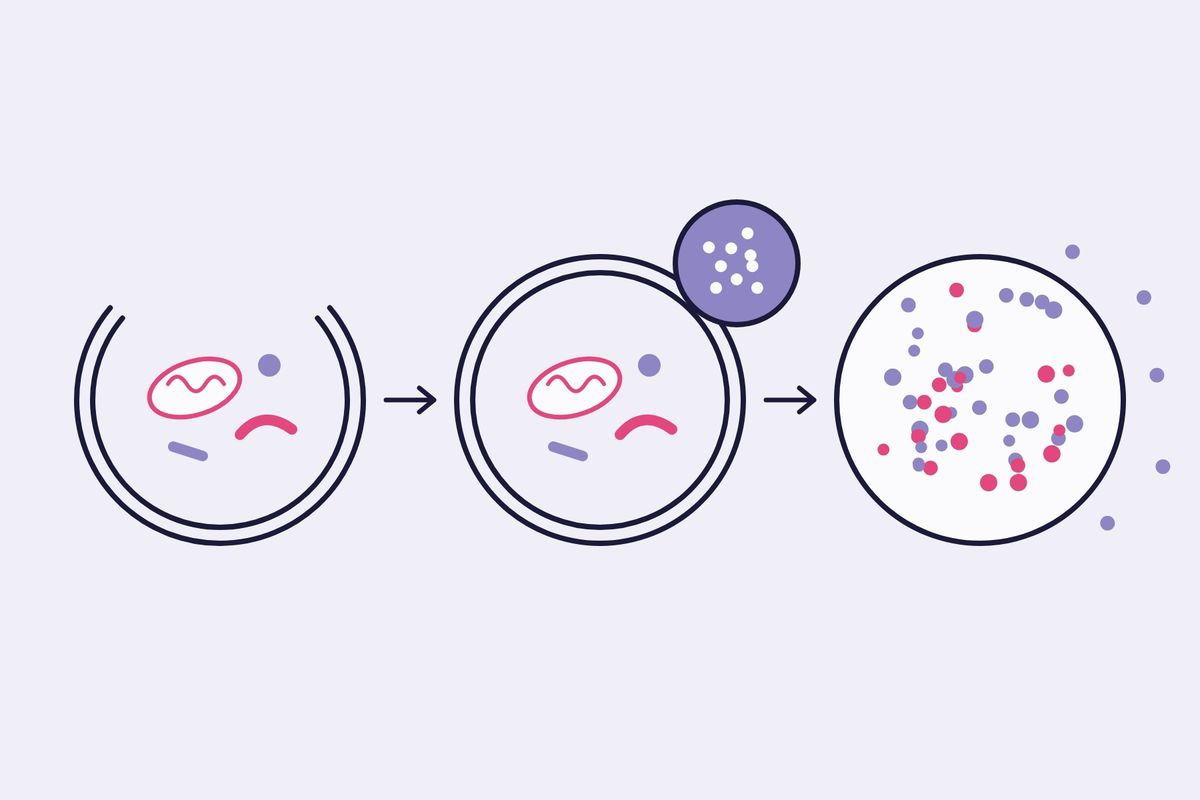
Inside every cell, the junk is piling up. Worn-out proteins. Broken machinery. Cellular debris that piles up faster every year you are alive.
Your cells have a way of clearing it out. It’s called autophagy, from the Greek for “self-eating.”
A cell devours its own worn-out parts and rebuilds fresh from the material.
The 2016 Nobel Prize in Physiology or Medicine was awarded for discovering how autophagy works.
Autophagy slows with age. Fasting is the famous way to switch it back on.

Spermidine is the other way. Your body produces spermidine for one reason: to launch autophagy.
The two are connected. In 2024, researchers reported that spermidine rises during fasting in 4 species, humans included (Hofer et al., Nature Cell Biology).
When they blocked it, fasting no longer triggered autophagy.
What’s in most spermidine supplements
If you’d rather not leave your intake to chance, there are supplements. This is where it pays to read the label.
Most spermidine supplements use wheat germ extract: a big capsule of plant material where only about 1% of the active ingredient is actual spermidine.
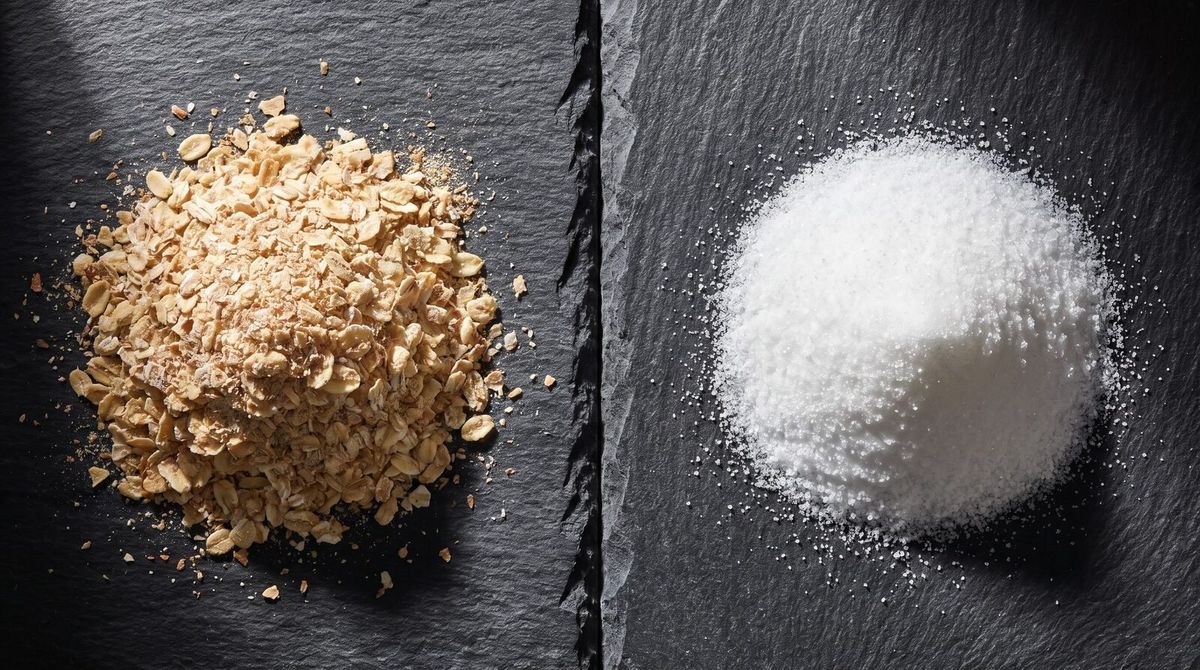
Wheat germ is wheat, so its allergens come along with it.
And some wheat germ labels give only the weight of the extract. They don’t say how much spermidine is inside.
In September 2026, an independent 3rd-party lab measured it directly, in SPMD-99 and 5 top competitors.
Each retail package reached the lab unopened. A serving is whatever each brand’s own label says it is.
| Product | Label says | Lab measured, per serving |
|---|---|---|
| SPMD-99 | 20 mg | 21.9 mg |
| Renue By Science Liposomal Spermidine | 8 mg | 19.0 mg |
| Nutricost Spermidine Wheat Germ Extract | Not stated | 11.0 mg |
| Double Wood Spermidine 10 mg | 10 mg | 10.4 mg |
| OMRE Spermidine Wheat Germ Extract | 10 mg | 9.4 mg |
| Longevity Labs spermidineLIFE | Not stated | 0.7 mg |
The testing was commissioned and paid for by the maker of one of the six products tested. The lab’s reports are dated September 17, 2026.
“Not stated” means the label gives only the weight of the wheat germ extract, not how much spermidine is in it.
Read the lab reports for all 6 products
SPMD-99 measured highest, and it delivered more spermidine than its own label promises. Double the spermidine of 4 out of the 5 top competitors tested.
Renue By Science came closest. Its liposomal capsules are labeled at 8 mg and measured 19.0 mg.
Double Wood delivered what its label says: 10.4 mg against a stated 10. OMRE came in just under its 10 mg, at 9.4.
The two with no spermidine figure on the label were far apart. Nutricost measured 11.0 mg in a 3-capsule serving, and spermidineLIFE measured 0.7 mg.
The one that measured highest
SPMD-99 is pure spermidine, not wheat germ extract.
It’s 99+% pure. No wheat. No gluten. Free from the 9 major allergens.
Each serving of 2 capsules is labeled at 20 mg, the highest dose in any leading brand. That meets or exceeds the dosage in every major study linking spermidine to a longer life.
Some protocols call for 40 mg, so it’s built to be taken once or twice a day.
It’s a good fit if you want the pure molecule, at a dose a lab has checked, or if you’re avoiding wheat.
All 6 products get a closer look, one by one, in our guide to the spermidine supplements the lab measured.
Sources
Brands have paid for promotional consideration in these articles.